- Home
- Mediation
When several people have to agree
Settling property disputes out of court — in separations, in communities of heirs, and wherever the price is not the real issue.
Dispute resolution
Resolving property disputes out of court. How mediation works, what it costs and when it beats lawyers and courts.

Why we offer this
In more than thirty years of buying and selling it has become clear that in very many cases interpersonal conflict is what really drives matters — and often ends up at the centre of every negotiation. That is why we have specialised in resolving property disputes through mediation.
Whether between spouses over a divorce property or within a community of heirs: going to court is lengthy and expensive. Mediation saves time, stress and money.
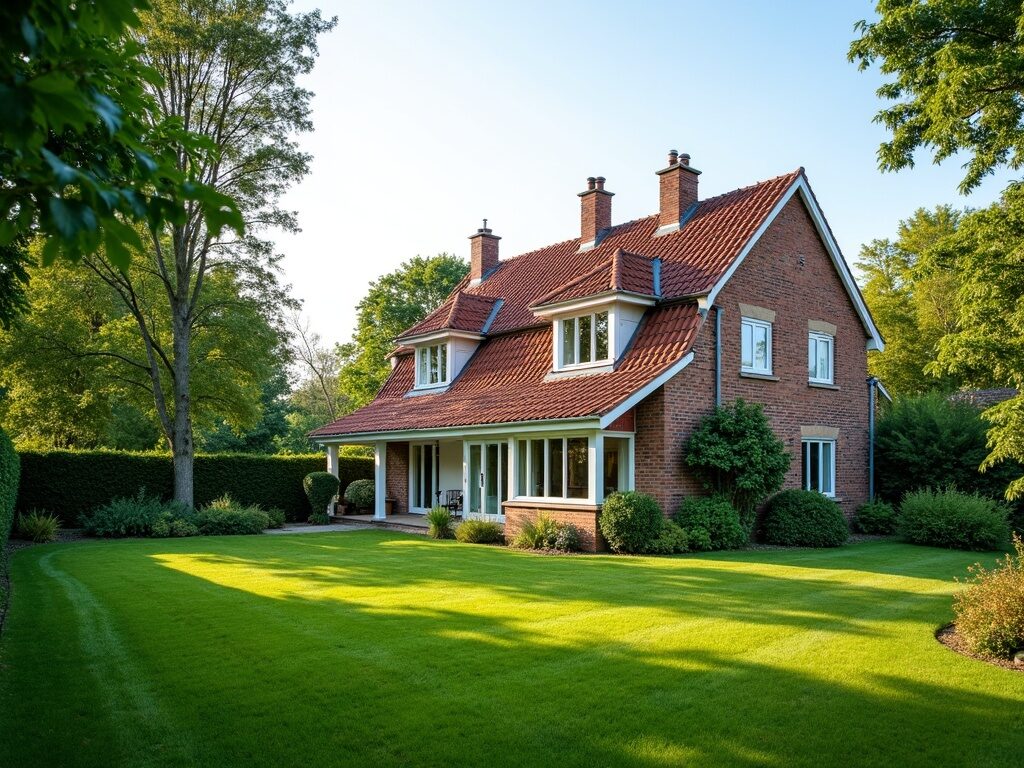
The dispute has an object
Almost always it is a house, a flat, a plot of land — something that cannot be divided without someone losing out.
That is precisely why the court route rarely produces an outcome both sides can live with.
In a conflict it is often not about the property at all, but about the relationship between the people involved.
Arno Kupec, trained property mediator
What mediation is
A procedure for the out-of-court and constructive handling of conflict. The mediator does not decide and does not represent either side — they conduct the conversation so that the participants find their own solution.
Mediation is
- confidential
- structured
- voluntary
- open-ended
The mediator is
- impartial towards all sides
- independent
- qualified
- bound to secrecy
The participants are
- responsible for themselves
- interested in a solution
- willing to listen
- authors of their own agreement
How a mediation works
The preliminary talk
Here we establish what needs clarifying. Rules and principles are discussed and the subject of the mediation is defined — it need not be the property alone.
The site visit
We look at the property together and put a robust valuation on the table. Figures are easier to talk about than memories.
The sessions
Three to five appointments of two hours each, working through the points one after another. Everyone has their say, nobody is overruled.
The follow-up
Whatever is agreed is put in writing. If you find along the way that you can settle the remaining questions yourselves, that is not a failure but the advantage of an open-ended procedure.
What it costs
| Scope | 3 to 5 sessions of 2 hours |
| Fee | 297.50 € including VAT per hour |
For comparison: contested proceedings over a property tie up legal and court costs for months, often years — and the amount in dispute follows the value of the property.
The statutory basis is set out in the German Mediation Act.
Divorce properties
When both mean the same house and want different things.

An exceptional situation
A separation is hard to bear for everyone involved. Much that was taken for granted has to be divided; shared plans are rewritten, disappointments from the past are in the room.
In that situation nobody finds it easy to make considered, fair decisions. In a dispute, spouses usually lose themselves in detail and the personal hurt comes first. Emotion prevents clear thinking — important aspects of the home drop out of sight, and the risk of losing out grows.

Why the property in particular
Houses, land and flats are usually the largest part of a family's assets and often its most valuable possession. Accordingly, the property frequently ends up at the centre of the dispute.
If no good arrangement is found, everyone loses: high legal and court costs, a conflict dragging on for years, additional stress — not infrequently to the point of illness.
What we do
Mediation is a procedure regulated by statute that aims at an agreed solution. We do not represent either side.
With understanding, openness and a sense for people we take account of both partners' needs and wishes — and bring along what decides the matter: a robust valuation of the property, which is easier to talk about than memories.
Divorce properties
The route through mediation, explained in a few minutes.
Divorce properties
This content is loaded from YouTube. In doing so the provider learns your IP address and may set cookies.
Inherited properties
In a community of heirs every decision has to be unanimous.

Many questions at once
Not infrequently, properties and their value are the reason why family members fall out or drift apart after a death. Usually a whole series of questions has to be settled — and in a community of heirs each of them has to be answered unanimously.
Who decides
- Who continues to look after the property?
- Does it stay in the community of heirs?
- Does one heir want to take it on?
What it is worth
- What is the actual market value?
- Should it be sold?
- At what point?
How it is divided
- Should shares be transferred?
- Should it be divided?
- Or charged against a loan?
Where all the heirs share the same interests, these points can be worked through calmly. Where views differ — often simply out of ignorance — conflict arises.
In a conflict it is often not about the property at all, but about the relationship between the family members.
Arno Kupec, trained property mediator
What it is really about
That is where we come in as mediators. We do not represent one heir or another. We are neutral, take account of everyone's interests and mediate a purposeful settlement of the estate — with knowledge of the property and more than thirty years in this industry.
Inherited properties
Deciding together instead of ending up in court.
Inherited properties
This content is loaded from YouTube. In doing so the provider learns your IP address and may set cookies.
What is at stake
Disputes between heirs regularly lead to empty properties, sometimes to forced sales, and to legal costs that burden every heir. Those costs can be avoided.
Details of the procedure and the fee are set out under mediation.
What is your property worth today?
A sound valuation is the beginning of every good decision — whether you sell this year or in five years' time.